MMseqs2
MMseqs2 (Many-against-Many searching) is a software suite to search and cluster huge sequence sets. MMseqs2 is open source MIT-licensed software implemented in C++ for Linux, Mac OS and Windows. MMseqs2 is designed to run on multiple cores and servers, making it highly scalable. MMseqs2 matches the sensitivity of BLAST, but with several orders of magnitude faster speed. It can perform profile searches, like PSI-BLAST, but with a speed advantage of up to 400 times faster.
While MMseqs2 includes many more modules, the prefiltering and alignment modules are the core modules that underpin its algorithm. The prefiltering module performs a rapid and sensitive double consecutive k-mer matching-based calculation of similarities between sequences in a query database and a target database, followed by an ungapped alignment. The alignment module then performs a vectorized Smith-Waterman alignment of sequences that pass a cut-off score in the prefiltering module. Both modules are parallelized to use all available computer cores, resulting in a highly efficient software suite. With its combination of sensitivity and speed, MMseqs2 can effectively search predicted ORFs in vast metagenomics datasets against the entire UniProtKB or NCBI-NR databases and assign functional clusters and taxonomic clades to reads that other software may be unable to map.
MMseqs2's clustering module is highly efficient at grouping similar sequences into clusters. It takes the similarity graph generated from the comparison of a sequence set with itself in the prefiltering or alignment modules as its input. Furthermore, MMseqs2 provides an updating workflow that allows for the addition of new sequences to an existing clustering while maintaining stable cluster identifiers, eliminating the need to recluster the entire sequence set. We use MMseqs2 to regularly update versions of the UniProtKB database, which have been clustered down to a 30% sequence similarity threshold.
Workflow
-
Input ORF sequence files
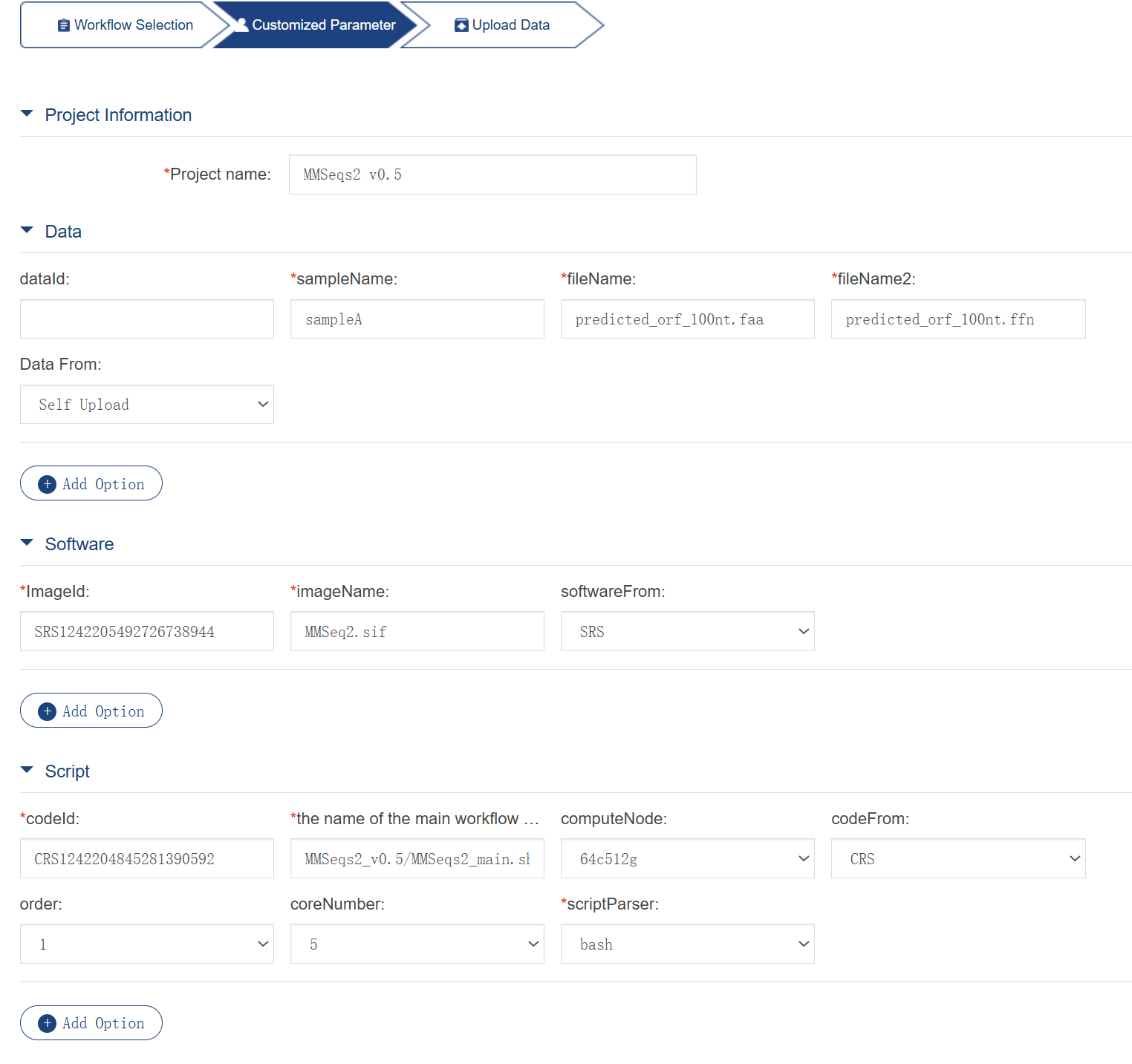
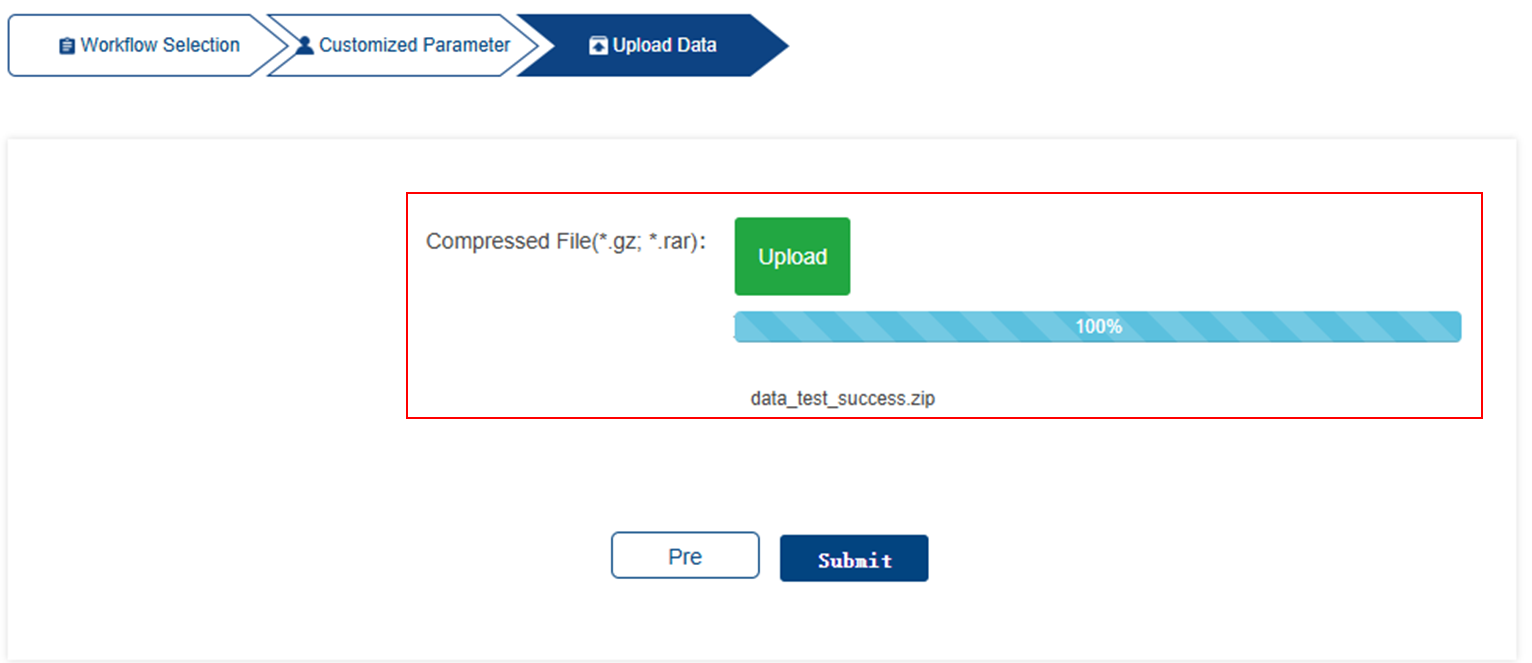
Upload predicted ORF amino acid sequences (.faa) and the corresponding nucleotide sequences (.ffn).
-
Prepare sequence identifiers
Add sample labels to sequence IDs to avoid duplicated identifiers across samples.
-
Run MMseqs2 clustering
Use mmseqs easy-linclust to cluster protein sequences based on sequence identity and coverage thresholds.
-
Extract representative sequences
Output representative amino acid sequences and retrieve the matching nucleotide sequences.
-
Generate clustering summary
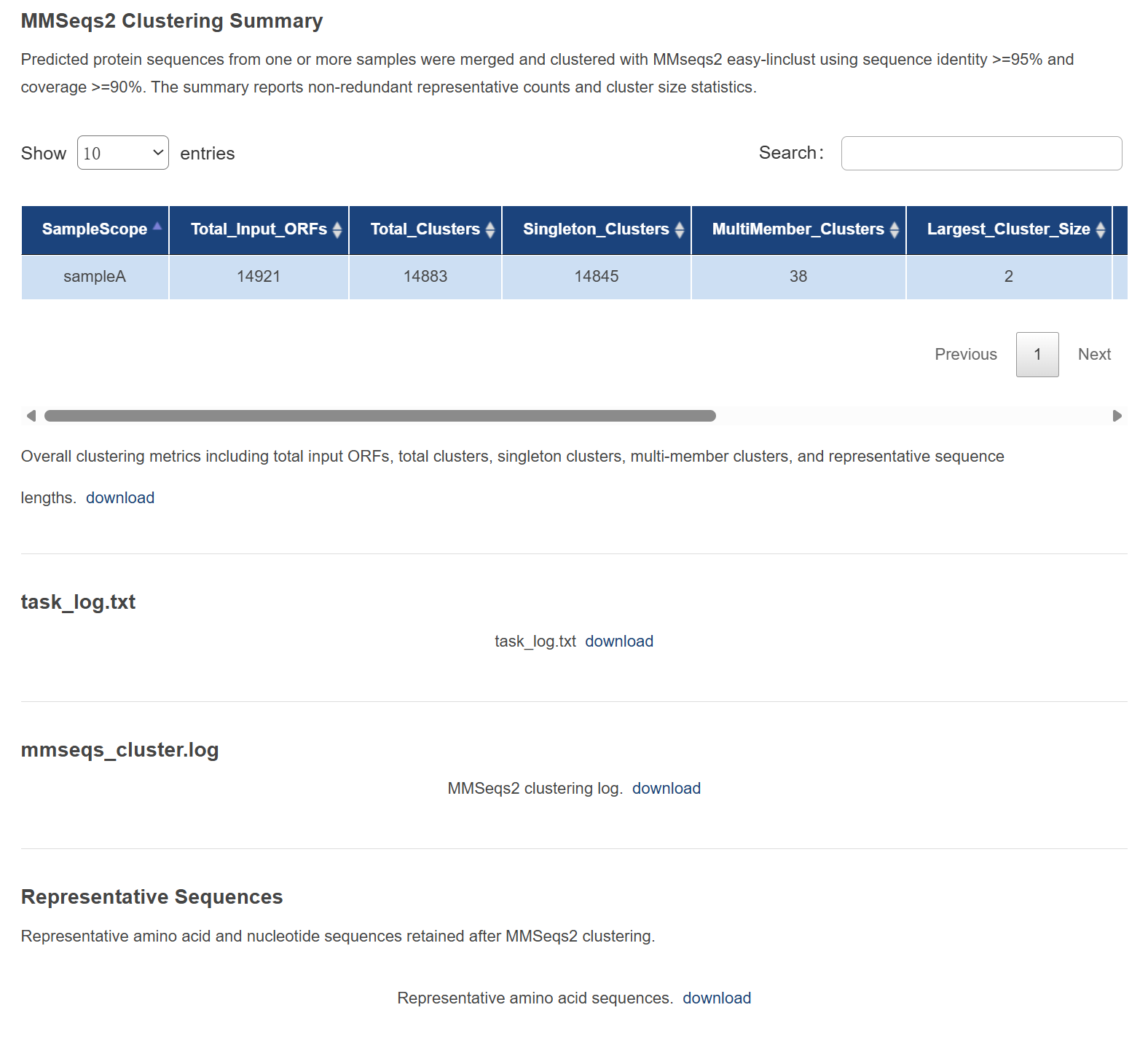
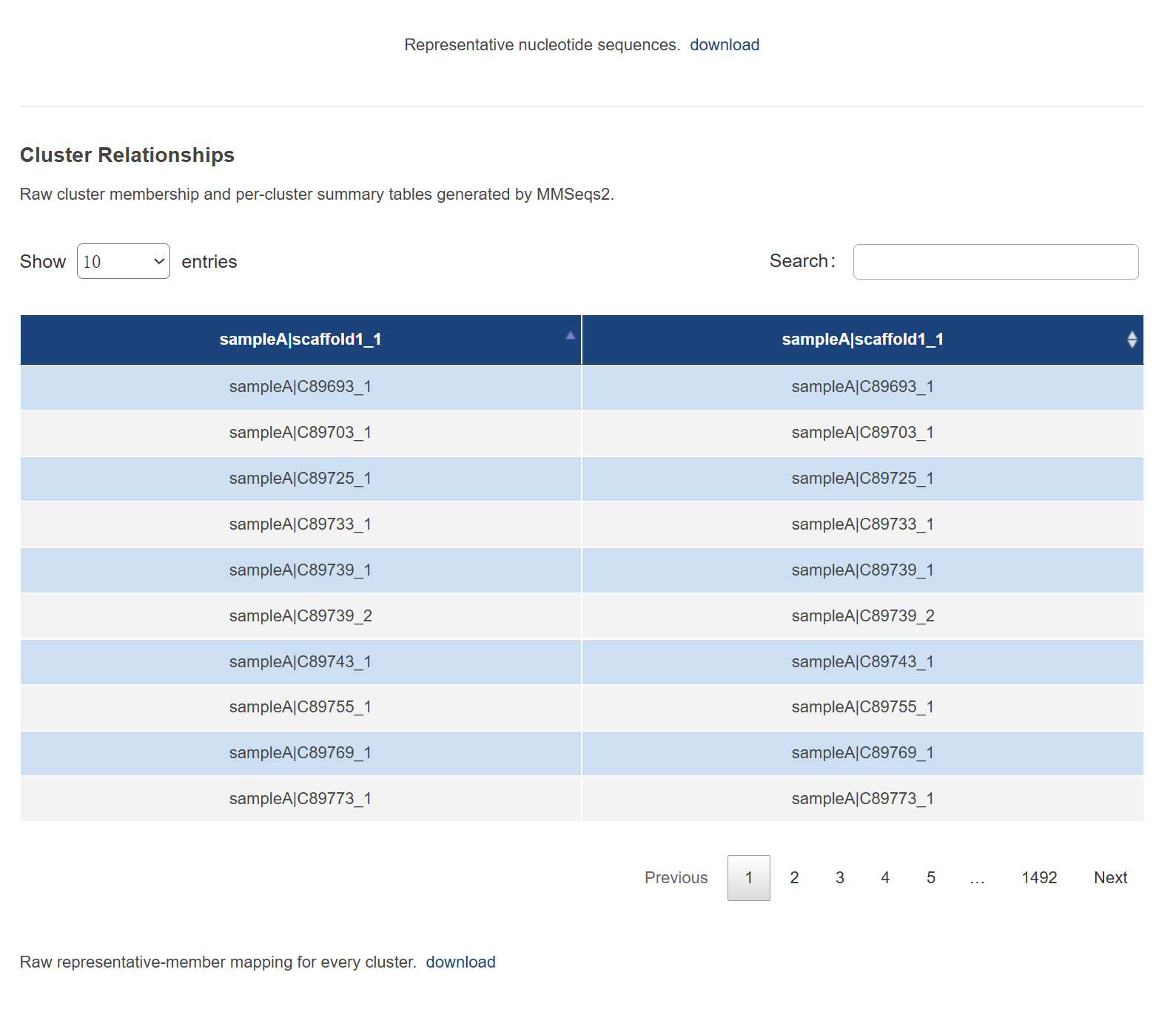
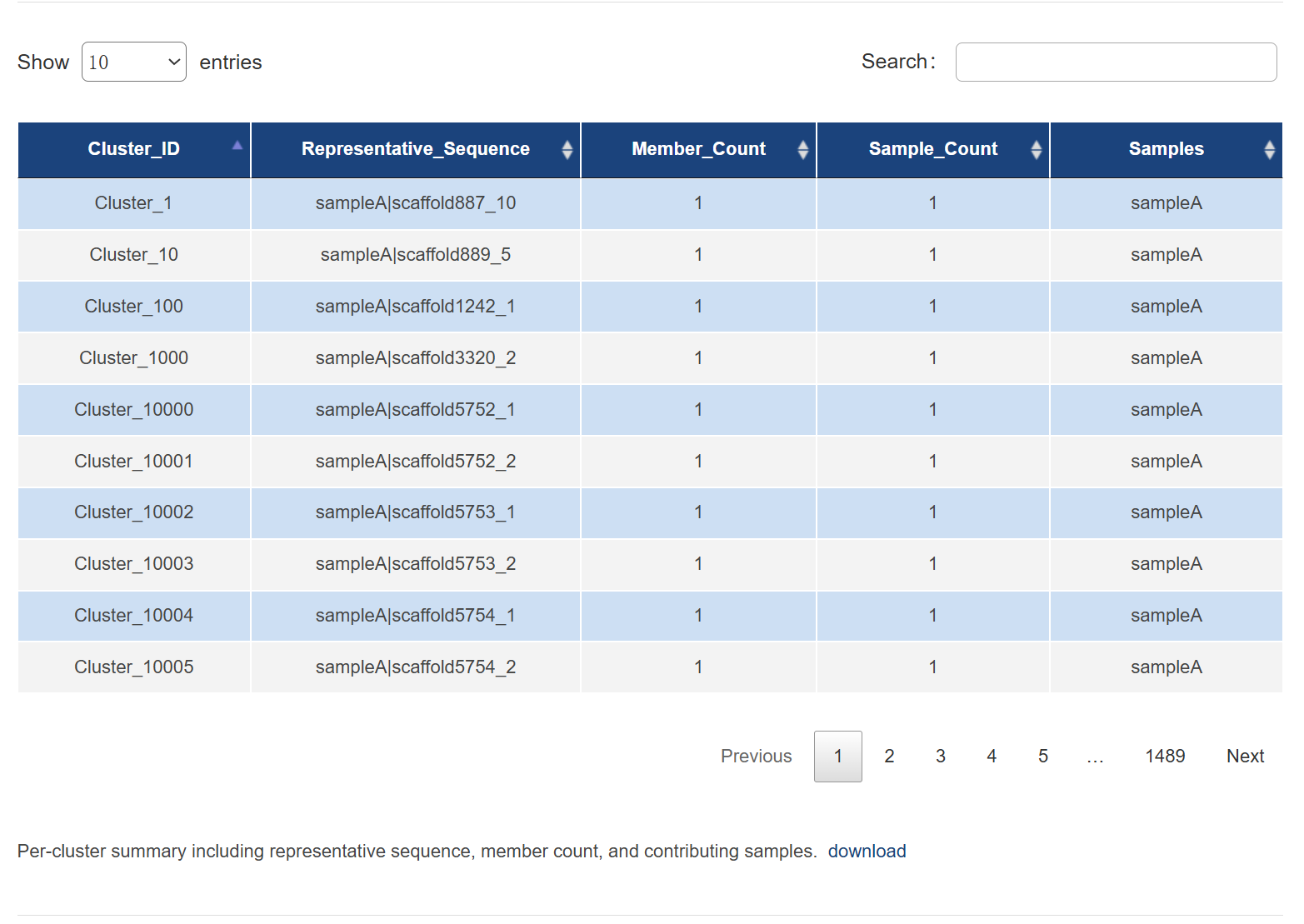
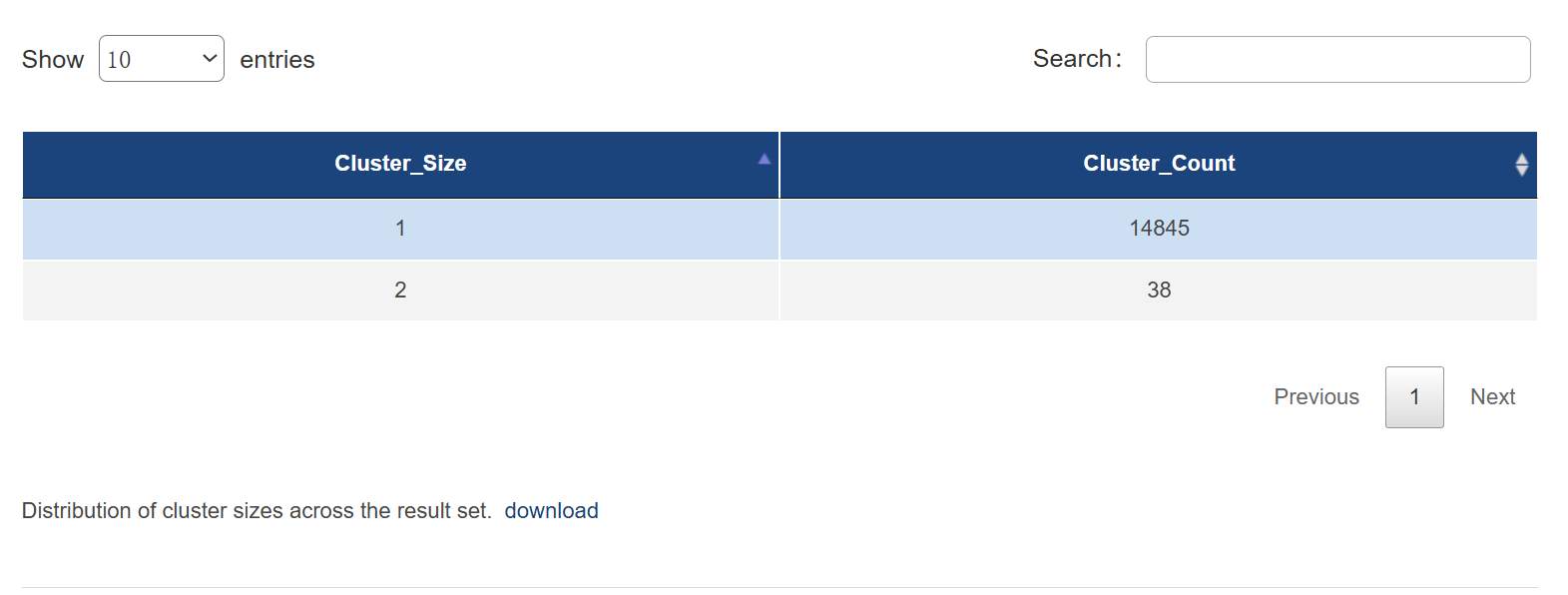
Produce cluster membership files, per-cluster summaries, cluster size distribution, and overall clustering statistics.



 Address: 800 Dong Chuan RD. Minhang District, Shanghai, China SJTU-Yale Joint Center for Biostatistics, SJTU